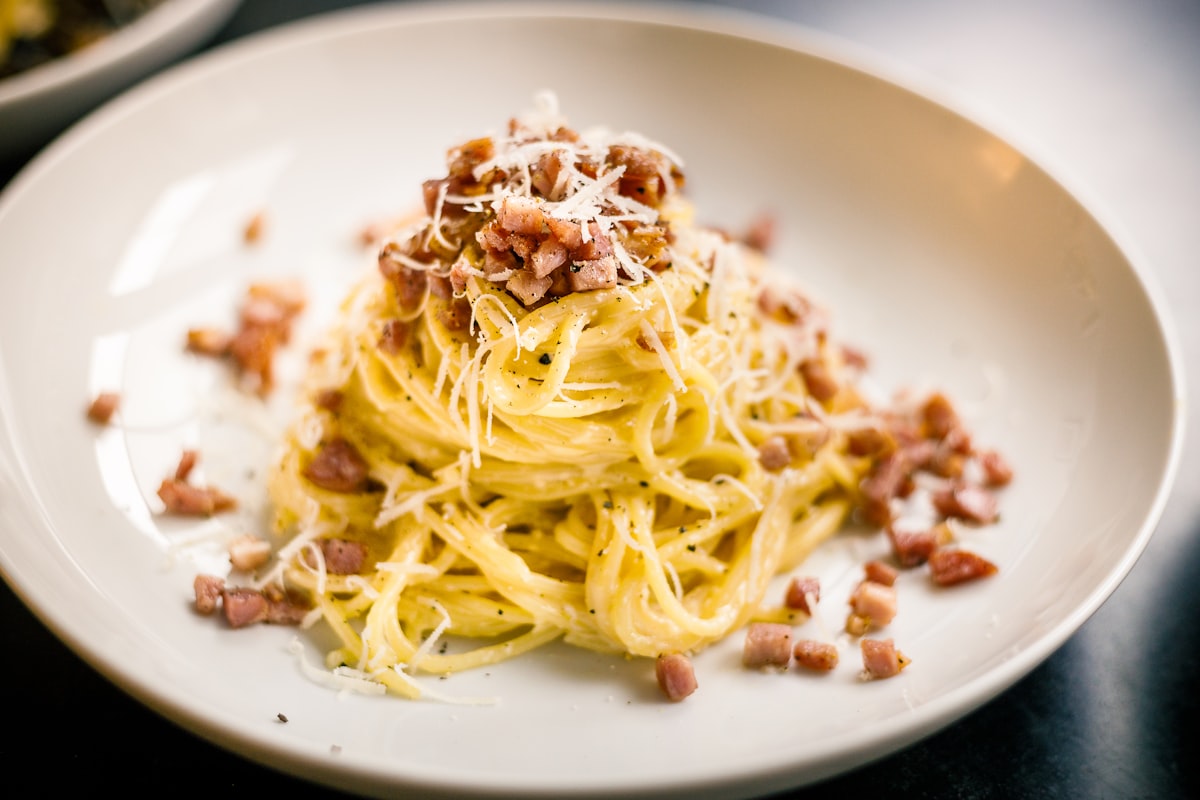
True carbonara has no cream. The silky sauce comes from the emulsion of egg yolks, starchy pasta water, and rendered fat from guanciale.
Why This Recipe Works
- Removing the pan from heat before adding eggs prevents scrambling while creating a silky emulsion
- Pecorino Romano has more fat and salt than Parmesan, giving carbonara its characteristic sharpness
- Reserving starchy pasta water is the key to adjusting consistency — it acts as an emulsifier
- Guanciale renders more fat than pancetta or bacon, coating every strand of spaghetti
Carbonara is one of those dishes that separates great Italian cooking from everything else. With just five core ingredients — guanciale, eggs, Pecorino Romano, black pepper, and pasta — there's nowhere to hide. Every element matters, and the technique is everything.
The History Behind Carbonara
Despite its iconic status, carbonara is a relatively modern invention. Most food historians trace it to Rome in the mid-20th century, possibly inspired by American GIs who brought bacon and eggs to Italy during World War II. The dish evolved from cacio e uova, a simpler egg-and-cheese pasta that shepherds had been making in the Apennine mountains for centuries.
Today, Romans take their carbonara very seriously. Use cream? That's not carbonara. Use bacon instead of guanciale? You'll get a lecture. The beauty of this dish is its purity — when done right, the eggs and cheese create a sauce so silky and rich you'd swear there was cream involved.
The Secret: Temperature Control
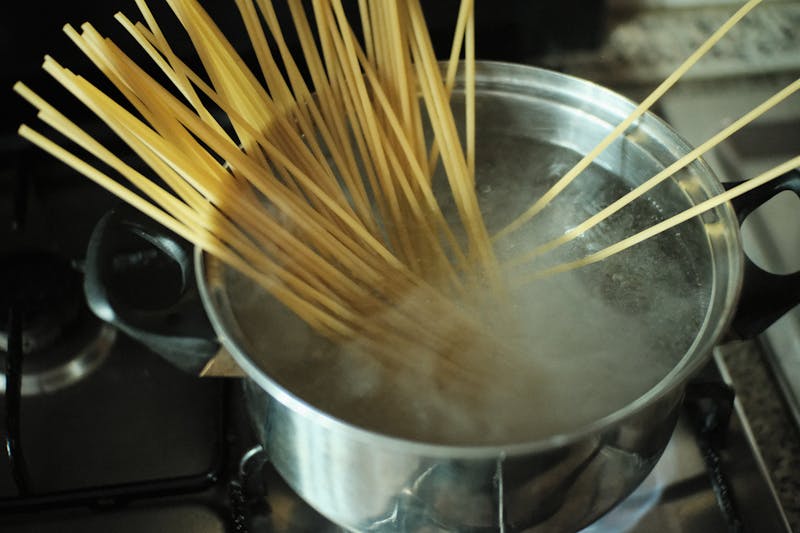
The single most important skill in making carbonara is managing heat. The egg mixture must be tempered — warmed gradually by the residual heat of the pasta and rendered fat, never by direct flame. If the pan is too hot, you get scrambled eggs. Too cool, and the sauce won't emulsify into that glossy, clinging coating.
Fans of this spaghetti carbonara should know that for another Italian-inspired dish, try the pesto pasta salad. On a similar note, for another Italian-inspired dish, try the tortellini pasta salad. See the full collection of dinner recipes when you're ready for more.
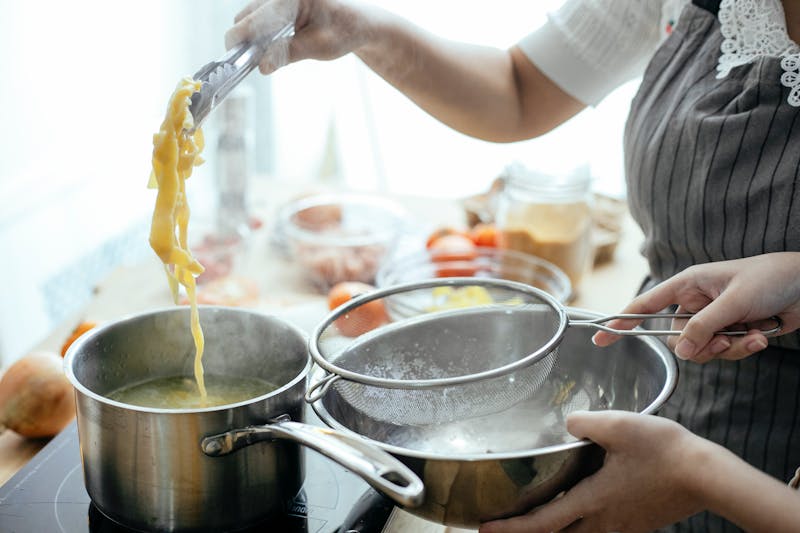
How It Comes Together
Chef Tips
- The key is to temper the eggs with hot pasta, not cook them directly on heat.
Variations
Rigatoni Carbonara
Swap spaghetti for rigatoni — equally traditional in Rome. The ridged tubes trap extra sauce in every bite.
Mushroom Carbonara
Add 200g sautéed mixed mushrooms (porcini, cremini) for an earthy twist. Not traditional, but delicious.
Carbonara with Spring Peas
Toss in a handful of blanched fresh peas in the final step. The sweetness pairs beautifully with the salty guanciale.
Serving Suggestions
Serve immediately on warm plates — carbonara waits for no one. Pair with a crisp white wine like Frascati or a light Pinot Grigio. A simple arugula salad with lemon dressing on the side keeps things balanced. Finish with extra cracked black pepper and a shower of Pecorino.
Make It Ahead
Carbonara must be served immediately — it cannot be reheated without the eggs scrambling. However, you can prepare the egg-cheese mixture and cut the guanciale up to a day ahead. Store separately in the fridge and bring to room temperature before cooking.