Vegetarian

Pasta Primavera

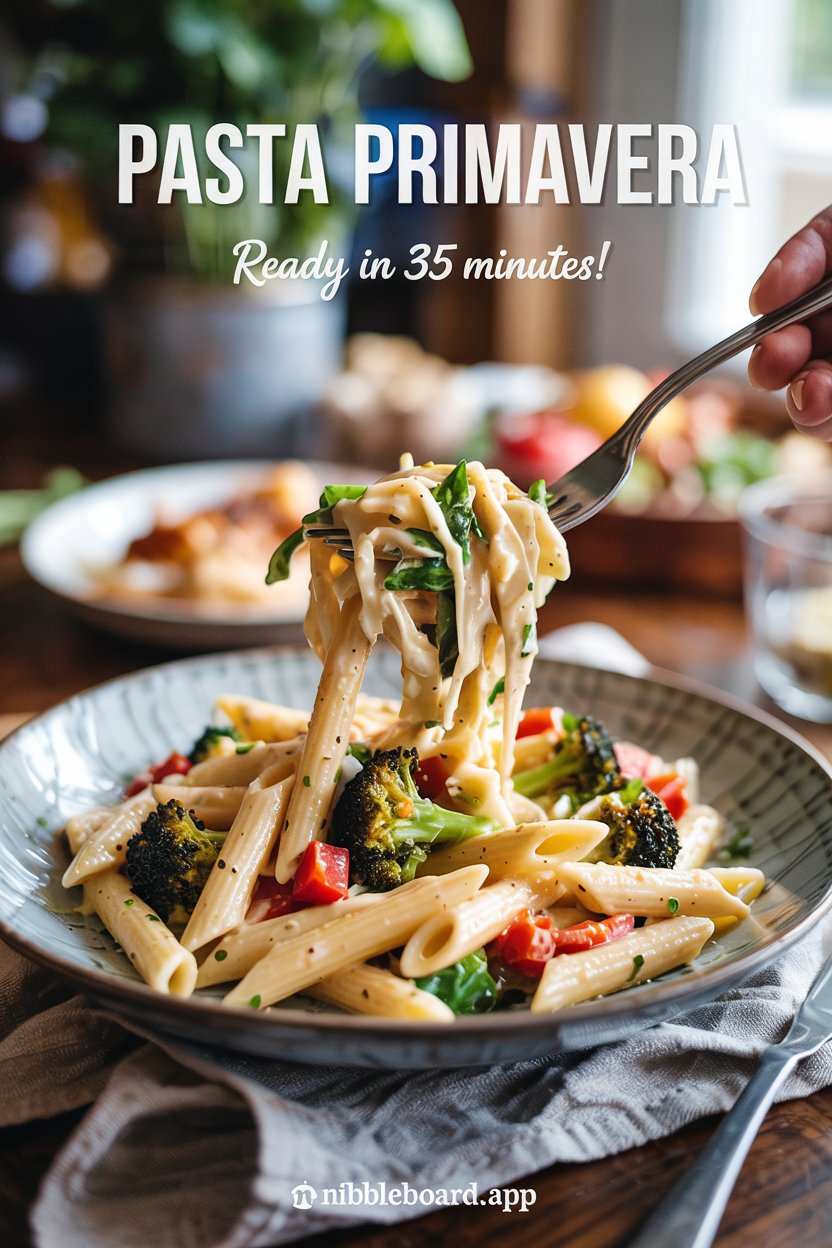
A creamy, vegetable-loaded pasta primavera with penne, seasonal veggies, and a light Parmesan cream sauce. Ready in 35 minutes.

Prep

15 min

Cook

25 min

Total

40 min

Servings

6

Difficulty

easy

NK

Nibbleboard Kitchen

April 6, 2026

Be the first to rate
pasta primavera recipe recipe

This pasta primavera is one of those recipes that makes eating your vegetables feel like a treat. Creamy Parmesan sauce, tender-crisp seasonal veggies, and al dente penne — it's the kind of dinner everyone at the table actually gets excited about.

Why This Recipe Works

  • Cooking the vegetables in batches by density ensures broccoli and peppers get properly charred while delicate zucchini stays tender
  • Building the sauce in the same skillet captures all the fond from the vegetables, adding layers of flavor
  • The combination of broth and cream creates a sauce that's rich but not heavy — you taste the vegetables, not just dairy
  • Adding lemon zest and juice at the sauce stage brightens everything and prevents the dish from feeling one-note

Can I tell you something slightly embarrassing? I used to think pasta primavera was boring. Like, "oh great, noodles with random vegetables" boring. Then I actually made it properly — with vegetables that still had some bite, a light cream sauce that wasn't drowning everything, and enough Parmesan to make it feel indulgent — and I completely changed my mind. This has been on repeat in my kitchen since last spring, and even Ben will eat it if I fish out the broccoli from his bowl first.
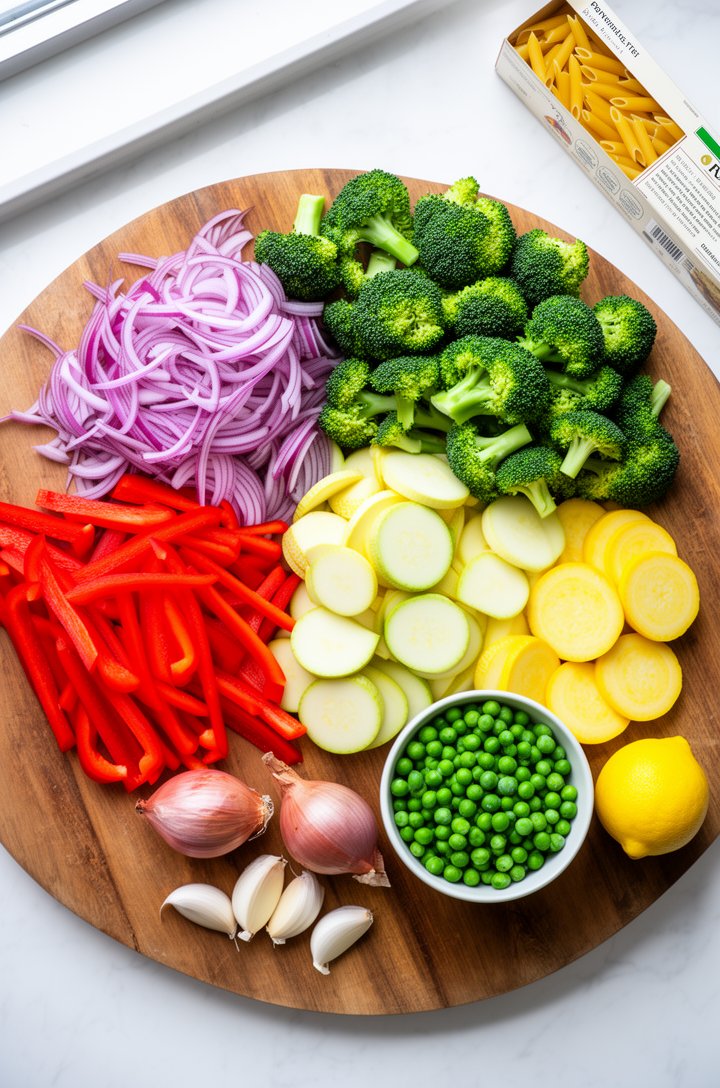
Overhead flat-lay food photography of colorful raw vegetables arranged on a large wooden cutting board — thinly sliced red onion, bright red bell pepper matchsticks, vibrant green broccoli florets, pa

The trick — and I learned this after a few mediocre attempts — is cooking the vegetables in batches. Broccoli and peppers need a bit more time than zucchini. If you dump everything in at once, half the veggies are mush and half are raw. Five minutes of extra effort, totally worth it. The cream sauce comes together in the same pan in about four minutes, and it's really more of a light coating than a heavy blanket. You should still be able to see and taste every vegetable.
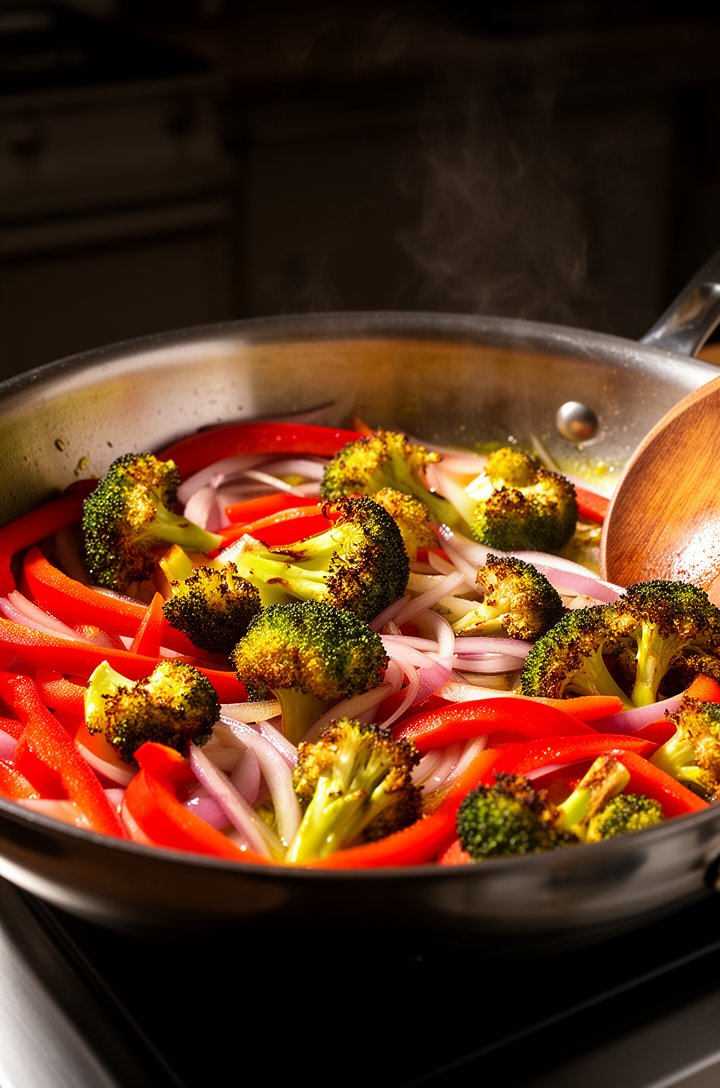
Close-up 45-degree angle shot of bright vegetables sautéing in a large stainless steel skillet — red bell pepper strips and broccoli florets with lightly charred golden edges, red onion slices turning

I make this with penne because those little tubes are perfect for catching the sauce and tiny bits of garlic and Parmesan. Matt's actually the one who suggested adding the lemon zest — "it needs something bright," he said, and he was completely right. That hit of citrus wakes the whole dish up.
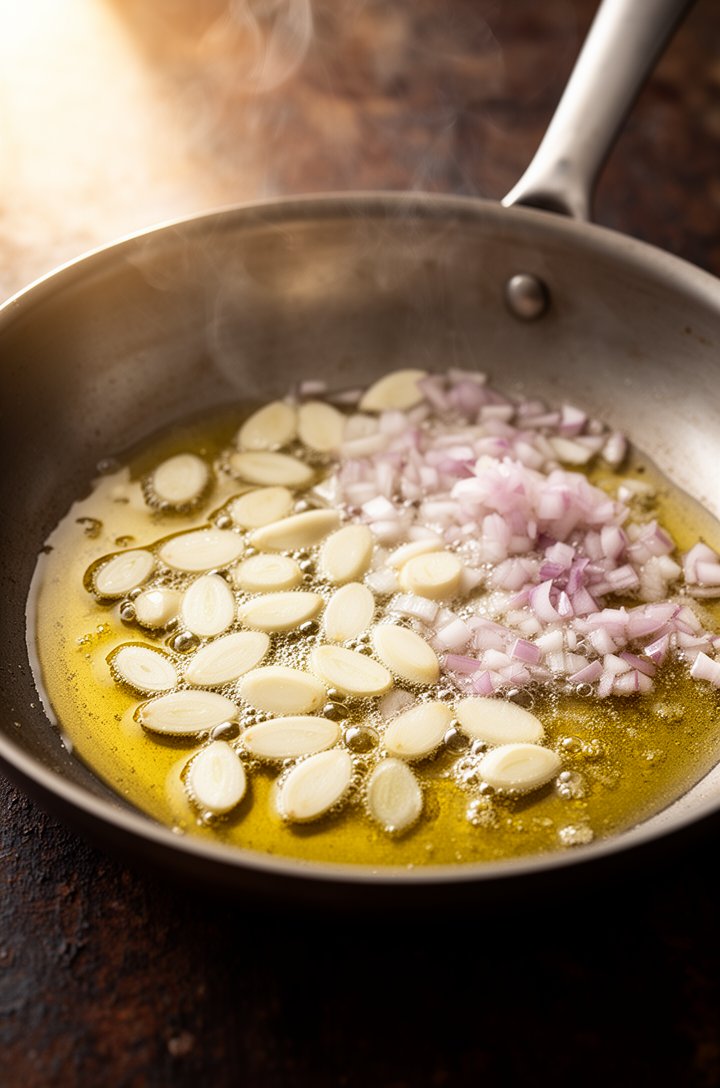
Overhead close-up of a large skillet with sliced garlic and minced shallot gently sizzling in melted butter, tiny bubbles forming around the garlic pieces, the butter turning golden amber. Warm natura

The beauty of pasta primavera is that it works with whatever vegetables look good at the store. I've swapped in asparagus, snap peas, even corn in the summer. The base sauce and technique stay the same — just group your veggies by how long they need to cook and you're golden.
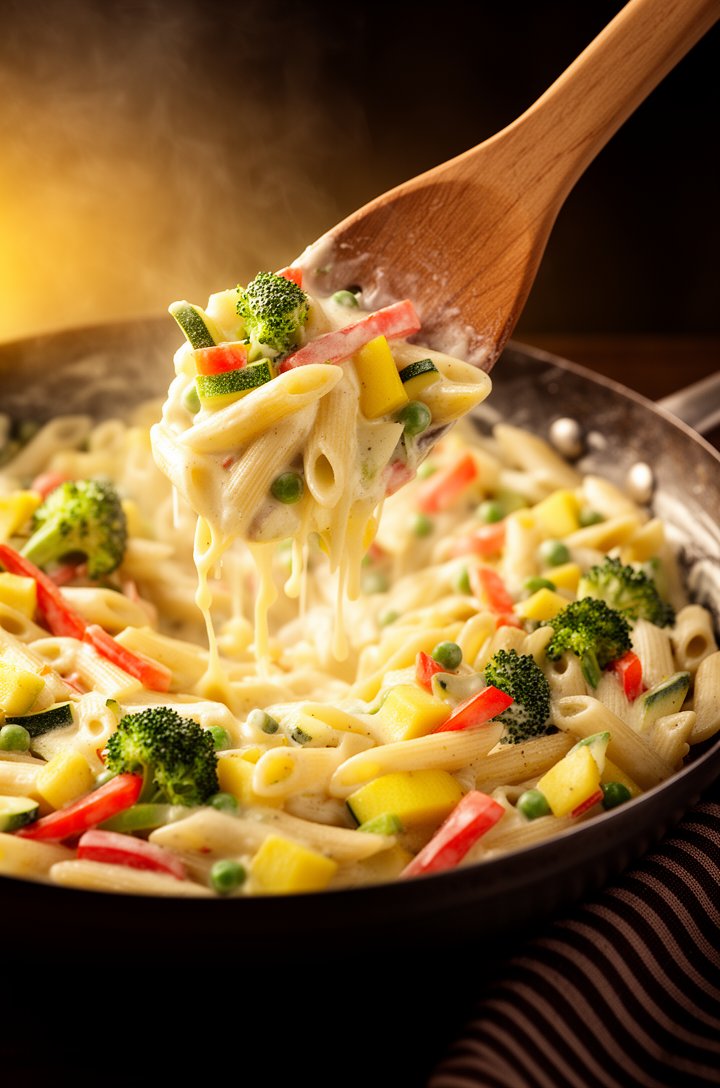
Side-angle dramatic shot of creamy pasta primavera being tossed in a large dark skillet with wooden tongs — penne pasta coated in light glossy Parmesan cream sauce with visible broccoli florets, red p

If you're on the fence about the cream, I get it — I've made this both ways. The no-cream version with extra broth and lemon is lighter and lets the vegetables really shine. The cream version is a little more comforting, a little more "I deserve this." Both are excellent. I included both variations below so you can choose your own adventure.
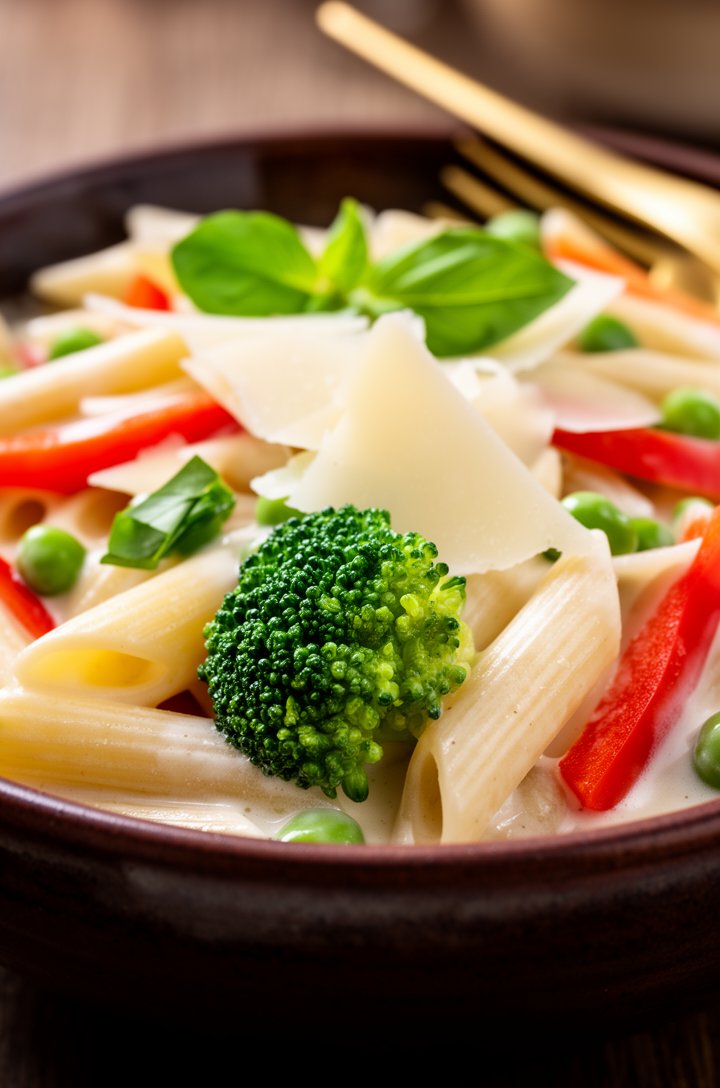
Extreme close-up 15-degree angle of a single serving of pasta primavera in a rustic dark brown ceramic bowl — penne pasta glistening with light cream sauce, a bright green broccoli floret in sharp foc

How It Comes Together

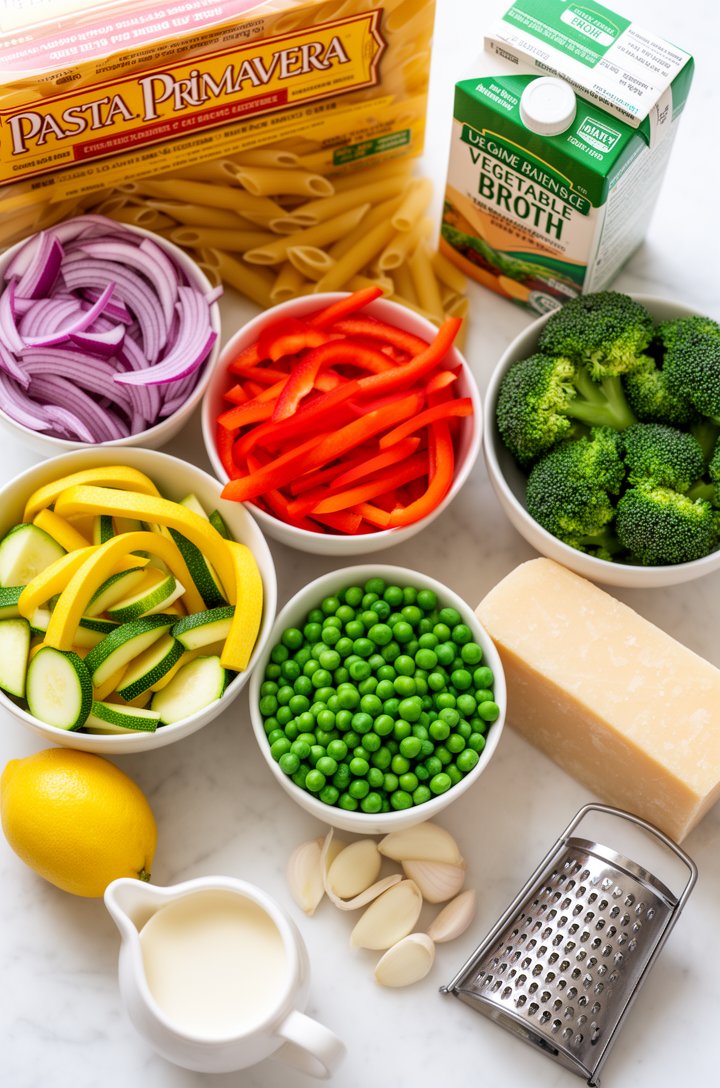
Overhead flat-lay of all pasta primavera ingredients arranged on a white marble surface — a box of penne, bowls of sliced red onion, bell pepper matchsticks, broccoli florets, zucchini and yellow squash half-moons, frozen peas, sliced garlic, a block of Parmesan with a small grater, a lemon, a small pitcher of cream, and a carton of vegetable broth. Bright even natural daylight, clean and organized mise en place, professional food blog styling
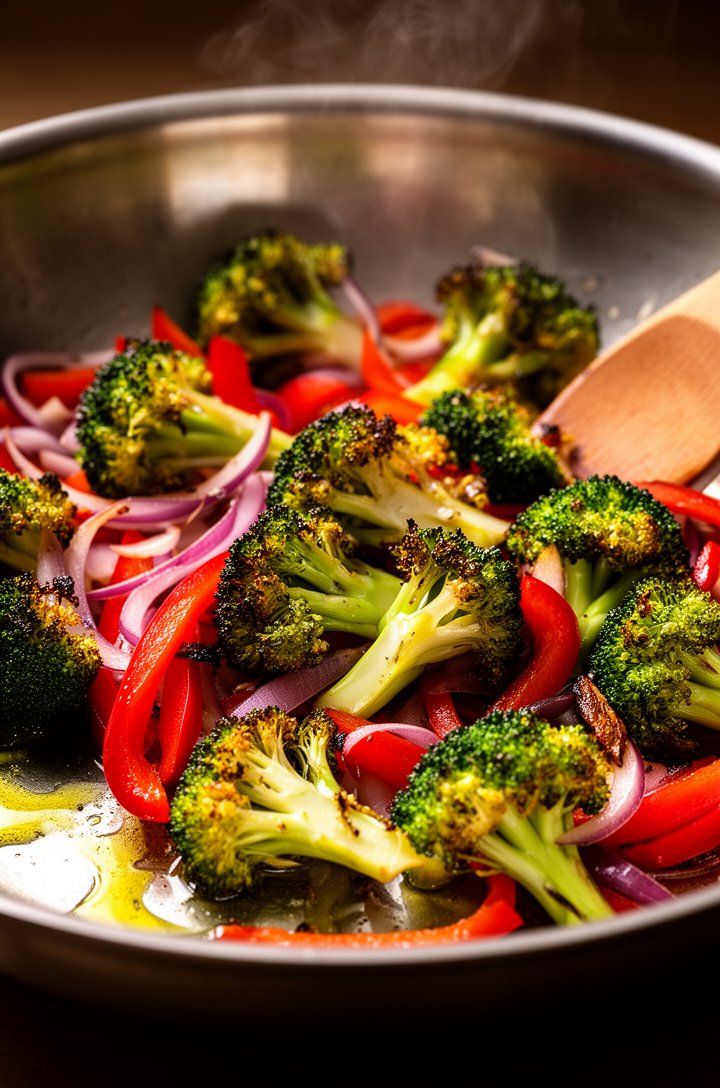
Close-up 45-degree shot of broccoli florets, red bell pepper strips, and sliced red onion sautéing in a large stainless steel skillet with olive oil, vegetables showing golden-brown charred edges while still vibrant in color, oil shimmering around the pieces, warm directional side lighting casting gentle shadows, wooden spoon visible at edge, steam rising
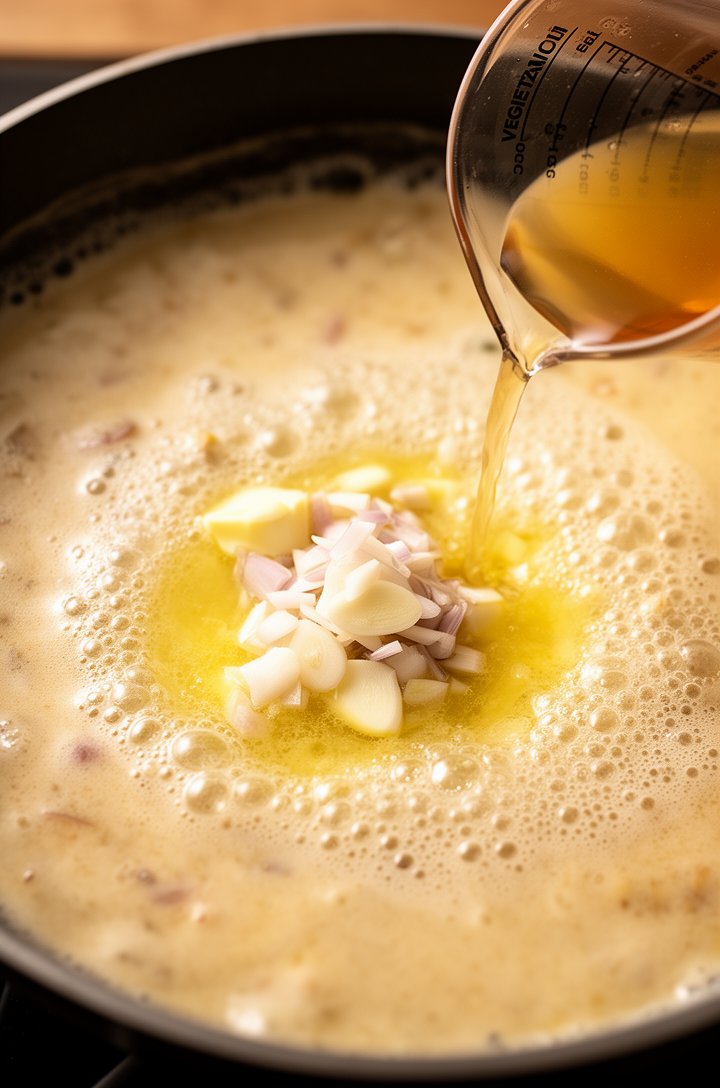
Overhead shot of a large skillet showing the cream sauce building — melted butter with sliced garlic and minced shallot in the center, vegetable broth being poured in from a measuring cup at the edge of frame, gentle bubbling visible, warm golden tones, shallow depth of field on the pouring liquid
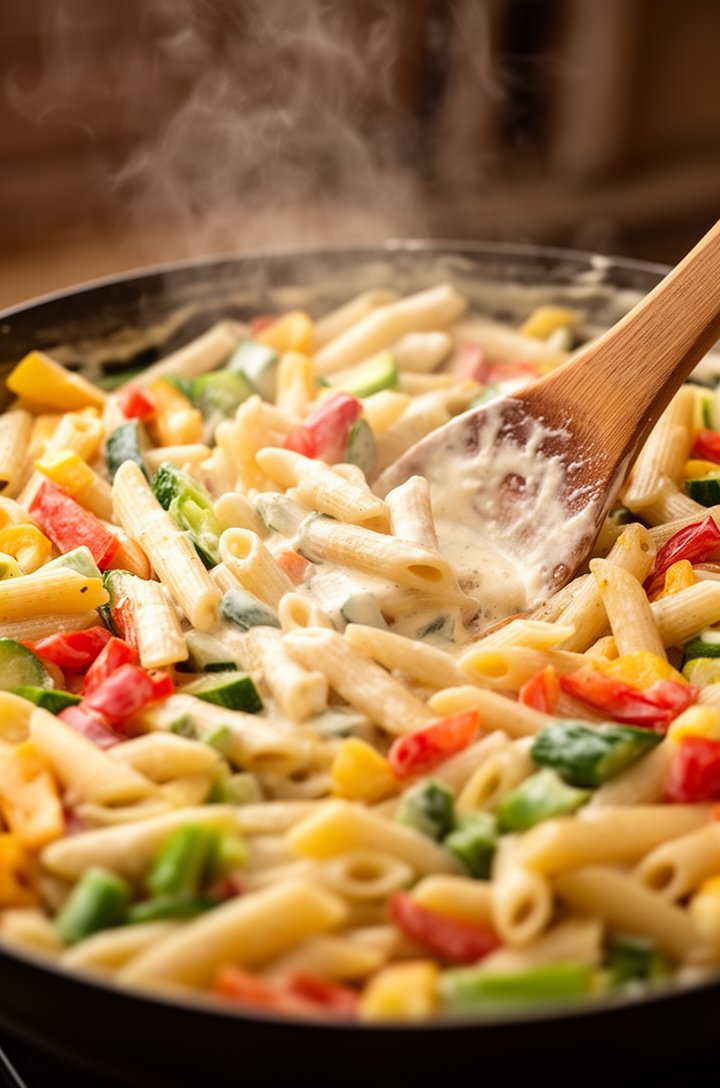
Side-angle action shot of penne pasta, sautéed vegetables, and cream sauce being tossed together in a large skillet with wooden tongs, the glossy Parmesan cream sauce visibly coating each piece of pasta and vegetable, bright pops of red, green, and yellow against the creamy sauce, steam rising, warm side lighting
Overhead shot of two rustic dark ceramic bowls of finished pasta primavera on a brown striped linen cloth, each bowl topped with fresh torn basil, shaved Parmesan curls, and a crack of black pepper. A wedge of Parmesan with a small grater, a glass of white wine, and scattered fresh basil leaves surround the bowls. Warm golden hour natural light from the side, shallow depth of field on the background elements, professional food blog final plating shot

Chef Tips

  • I always reserve that cup of pasta water — it's liquid gold for adjusting the sauce consistency. The starch helps everything cling together.
  • Don't overcook the vegetables. You want them crisp-tender with a little bite, not mushy. They'll continue cooking when you toss them back into the hot sauce.
  • After trying both ways, I always slice the garlic instead of mincing it here. Thin slices melt into the sauce and give you these lovely little pockets of flavor.
  • For a lighter version, skip the cream entirely and use an extra 1/2 cup of broth plus a squeeze of lemon. It's a completely different vibe but still delicious.
  • This reheats best with a splash of broth or water in a covered skillet over low heat — the microwave makes the veggies rubbery.

Variations

Light Pasta Primavera (No Cream)

Skip the cream and butter. Use 1.5 cups vegetable broth total, extra lemon juice, and finish with 3/4 cup Parmesan and a generous drizzle of good olive oil.

Roasted Vegetable Primavera

Toss all the vegetables with olive oil and roast at 425°F for 20 minutes instead of sautéing. The caramelized edges add incredible sweetness.

Pesto Primavera

Replace the cream sauce with 1/3 cup basil pesto thinned with pasta water. Toss with the sautéed vegetables and pasta for a bright, herby take.

Spicy Primavera with Calabrian Chili

Add 1 tablespoon Calabrian chili paste to the sauce along with the cream. Top with chili flakes and a drizzle of chili oil.

Serving Suggestions

Serve with crusty garlic bread and a simple arugula salad with lemon vinaigrette. A glass of Pinot Grigio or Sauvignon Blanc pairs beautifully.

Make It Ahead

Prep and slice all vegetables up to 24 hours ahead and store in an airtight container in the fridge. Cook the pasta and sauce fresh for best results.
Pasta Primavera

A creamy, vegetable-loaded pasta primavera with penne, seasonal veggies, and a light Parmesan cream sauce. Ready in 35 minutes.

Prep

15 min

Cook

25 min

Total

40 min

Servings

6

Difficulty

easy

Calories

463

Print
Share:

Ingredients

servings

Ingredients

Garnish

Instructions

  1. 1

    Bring a large pot of generously salted water to a boil. Cook the penne according to package directions until al dente. Two minutes before the pasta is done, add the frozen peas to the pot.

    11 min

  2. 2

    Drain the pasta and peas, reserving 1 cup of the starchy pasta water. Set aside.

  3. 3

    Heat olive oil in a large skillet or Dutch oven over medium heat. Add the red onion, red bell pepper, and broccoli florets. Cook, stirring occasionally, until the vegetables are crisp-tender and lightly charred at the edges, about 5 minutes.

    5 min

  4. 4

    Add the zucchini and yellow squash. Season with a pinch of salt and pepper. Cook for another 3 minutes until just tender but still vibrant.

    3 min

  5. 5

    Transfer all the vegetables to a plate and set aside.

  6. 6

    In the same skillet over medium heat, melt the butter. Add the minced shallot and sliced garlic. Cook, stirring constantly, until fragrant and softened, about 2 minutes.

    2 min

  7. 7

    Pour in the vegetable broth and bring to a boil. Reduce heat to medium-low and let it simmer for 3 minutes until slightly reduced.

    3 min

  8. 8

    Stir in the heavy cream, lemon zest, and lemon juice. Simmer gently for 2 minutes until the sauce thickens slightly.

    2 min

  9. 9

    Add the reserved vegetables, drained pasta and peas to the skillet. Toss everything together over medium heat. Stir in the Parmesan until melted and the sauce coats every piece of pasta.

  10. 10

    Taste and adjust seasoning with salt and pepper. If the sauce feels too thick, splash in a bit of the reserved pasta water until it's silky and loose enough to coat the pasta.

  11. 11

    Serve immediately, topped with fresh basil, parsley, and extra Parmesan.

Equipment

large potlarge skillet or Dutch ovencolander

Nutrition per Serving

463

Calories

19g

Protein

46g

Carbs

24g

Fat

8g

Fiber

10g

Sugar

802mg

Sodium

Estimated Cost

$28.47total
$4.75per serving

*Based on average US grocery prices

Storage & Leftovers

Storage: Store leftovers in an airtight container in the fridge for up to 3 days. The sauce will thicken as it sits — that's normal.

Reheating: Reheat in a skillet over medium-low heat with a splash of broth or water, stirring gently until warmed through. Cover the skillet to help steam the vegetables back to life.

Freezing: Freeze in individual portions for up to 2 months. Thaw overnight in the fridge. Note that zucchini and squash will soften after freezing — still tasty, just a different texture.

ItalianVegetarianWeeknightMeal Prep

Frequently Asked Questions

Nutrition Facts

6 servings | about 1.5 cups

Calories463

% Daily Value*

Total Fat 24.4g31%
Total Carbohydrate 45.9g17%
Dietary Fiber 8g29%
Total Sugars 9.5g
Protein 19.3g39%
Sodium 802mg35%

*Percent Daily Values based on a 2,000 calorie diet.

Reviews & Comments

No reviews yet. Be the first to leave a review!

You Might Also Like